
Best Progressive Jackpot Slots: What to Check
 Available in AU
Progressive slots add wager contributions to a growing prize pool, but eligibility, triggers and payout terms vary by game.

Table of Contents
- How a Progressive Jackpot Builds Between Spins
- What a Casino Can Tell You About Jackpot Access and Payouts
- How Progressive Machines Differ from Standard Slots
- Check the Jackpot Qualification Before You Choose a Slot
- Why a Bigger Jackpot Is Not a More Predictable One
- Free Play, Real-Money Spins and Bonus Terms
- Four Ways a Progressive Jackpot Can Be Triggered
- What to Verify in Microgaming Progressive Slots
- Why There Is No Single Set of Progressive Slots
- How to Judge a Slot That Has a Progressive Jackpot
How a Progressive Jackpot Builds Between Spins
A progressive jackpot is a prize that increases as contributions from wagers are added to a pool. Instead of remaining at a fixed value, the jackpot grows over time while the game continues without a winning result. When the qualifying win occurs, the pool is awarded and then reset to a starting amount, ready to build again.
That cycle is the basic idea behind progressive jackpot pokies. Each eligible spin contributes a share of its wager to the prize pool. The contribution is set by the game’s design; it is not a separate amount you add manually. The rest of the wager is handled under the game’s other rules. The jackpot figure shown on screen reflects the accumulated pool, not a promise that the next spin will award it.
Where the growing prize comes from
A progressive pool is funded through a predetermined portion of wagers. Descriptions of the contribution rate do not all agree: one gives a typical range of 1% to 3%, while another gives 1% to 5%. Those figures should not be combined into a single supposed standard. The contribution for a particular game depends on its design, so the paytable or help screen is the place to check what that game states.
When you’re looking for progressive jackpot slots in Australia, check the available operator details before deciding where to play. The information here focuses on stated licensing, minimum deposits and payout times; it does not specify jackpot games or features.
License: Curacao Gaming Control Board OGL/2023/176/0095 (Hollycorn N.V.) You can note LuckyVibe’s stated Curacao Gaming Control Board licence, OGL/2023/176/0095, held by Hollycorn N.V. No jackpot-specific details are provided here.
License: Curacao (operating since 2017) · Min. deposit: A$20 Uptown Pokies is stated to have operated since 2017 and has a A$20 minimum deposit. You aren’t given jackpot-specific details here.
License: Tobique Gaming Commission · Payout speed: crypto ~10-15 minutes, fiat 1-5 days · Min. deposit: A$30 SkyCrown’s stated licence is from the Tobique Gaming Commission, and its listed minimum deposit is A$30. You can also note the stated payout estimates: around 10–15 minutes for crypto and 1–5 days for fiat.
License: Curacao, operated by Dama N.V. You can note that 7Bit Casino is licensed in Curacao and operated by Dama N.V. No jackpot-specific details are provided here.
License: Curacao eGaming OGL/2023/174/0082 (Dama N.V.) · Min. deposit: A$15 LevelUp Casino’s stated Curacao eGaming licence is OGL/2023/174/0082, held by Dama N.V., and its minimum deposit is A$15. You aren’t given jackpot-specific details here.
License: Curacao eGaming (Roby Games Ltd) Roby Casino is stated to hold a Curacao eGaming licence, with Roby Games Ltd named as the operator. No jackpot-specific details are provided here.
License: Curacao eGaming (Hollycorn N.V., since 2017) · Min. deposit: A$20-30 (depends on the offer) You can note Playfina Casino’s stated Curacao eGaming licence, held by Hollycorn N.V., and its operation since 2017. The listed minimum deposit is A$20–30, depending on the offer.
License: Curacao Gaming Authority (Jumpman Gaming Ltd) DragonSlots Casino is stated to be licensed by the Curacao Gaming Authority, with Jumpman Gaming Ltd named as the operator. No jackpot-specific details are provided here.
Payout speed: crypto ~90 minutes, fiat 1-5 days · Min. deposit: A$30 Kingmaker lists a A$30 minimum deposit and estimated payout times of around 90 minutes for crypto and 1–5 days for fiat. You aren’t given licensing or jackpot-specific details here.
License: international iGaming licence – jurisdiction not named in the source · Payout speed: PayID 1-24 hours · Min. deposit: A$30 (PayID from A$10) House of Pokies lists PayID payouts of 1–24 hours and a A$30 minimum deposit, or A$10 when using PayID. Its source describes the licence as international but does not name the jurisdiction.
As spins are made, contributions are added to the pool. This can happen across a linked network of participating games, rather than only on one machine. In that arrangement, wagers from the connected games feed the same jackpot, so the displayed prize can grow through activity across the network. The precise pool structure belongs to the game’s rules; “progressive” describes a growing prize, but does not by itself tell you how many games contribute to it.
A stand-alone progressive works on a narrower scale, with its pool associated with a particular game or machine rather than a wider network. Either way, the central process is similar: contributions accumulate, the jackpot remains available until it is won, and the pool restarts after the award. The scale of participation changes how the pool is fed, not the meaning of the word “progressive”.
What happens between wins
Imagine the pool after a jackpot has been paid. It begins again from its designated base amount. Each subsequent contribution increases it, and the displayed figure rises as the pool grows. If no winning result occurs, the contributions continue to accumulate. Once the jackpot is hit, that cycle ends: the pool is paid and reset to its base amount.
The displayed total is therefore a running balance, not a countdown. A larger figure tells you that more contributions have accumulated since the previous reset. It does not show how close the game is to awarding the prize, nor does it indicate that a win is due. Each spin remains a separate outcome; the jackpot’s growth records contributions, not progress towards a scheduled hit.

That distinction is useful when comparing progressive jackpot slots online. Two games may both show a rising prize, yet differ in how their pools are funded and where contributions come from. The headline figure alone cannot tell you the contribution rate or whether the pool is shared across a network. Check the game information for those details instead of treating the largest displayed total as a complete description of the game.
Reset, then rebuild
After a jackpot win, the pool does not generally stay at its peak. It returns to a base amount and begins accumulating contributions again. The reset is part of the progressive design: one cycle ends with the award, and another starts from the new base. A recently reset pool may look modest beside a pool that has been growing for a long time, but both are operating under the same accumulation-and-reset principle.
For anyone reading about progressive jackpot pokies in Australia, the mechanism is worth separating from the practical question of access. The pool explains how the prize changes over time; it does not, by itself, establish where a game is available or how any particular service operates. Here, the useful comparison is simply the pool’s structure: what wagers contribute, whether the prize is shared, and what amount it returns to after a win.
A progressive jackpot is a running balance that records contributions; it does not indicate how close a game is to awarding a prize or that a win is due.
The “best” progressive jackpot pokies depend on which pool design you are trying to understand, not just on the largest number currently displayed. A growing prize can look impressive, but the number is only one part of the mechanism. Contribution rules and the reset point explain how that figure gets there—and why it starts building again after a winner claims it.
Pool grows. Then resets.
What a Casino Can Tell You About Jackpot Access and Payouts
For an Australian reader, the first access check is legal, not technical. The Interactive Gambling Act 2001 prohibits operators from providing real-money online casino games, including pokies, to people physically located in Australia. A site describing a progressive jackpot does not change that position.
Where a jackpot is offered, the casino may display the prize and explain how a player can claim it. But the pool itself is not necessarily held by that casino. Progressive pools are stored on the software provider’s server, so the casino may be the point where you see the game and submit a claim while the prize system sits elsewhere. The distinction matters: a casino’s own page can explain its payout process, but it may not control the underlying pool.
Check the pool’s scope
Look for wording that identifies whether the jackpot is stand-alone or linked across a network. A stand-alone prize is associated with a single game installation or casino environment; a linked progressive can draw contributions and award a prize across a provider’s network. Do not assume that a jackpot is shared merely because several casinos display a similar game title or prize graphic. The game rules should state the relevant arrangement.

That detail affects what “access” means. If a prize is network-linked, the pool may be administered through the provider’s system rather than separately by each casino. The casino’s role may be to provide access to the game and handle account and claim procedures. Confirm which entity is responsible for verifying a win, what information you must supply, and where the casino directs questions about the prize. Clear terms should identify the process rather than leaving you to infer it from a live counter.
Treat promotional wording as a summary, not the complete agreement. Check the game information and the casino’s jackpot terms for any distinction between eligibility, verification and payment. These are separate questions: being able to view a progressive jackpot casino game does not, by itself, establish that every player or every account can claim its displayed prize.
Read the payout terms before relying on the displayed prize
A headline jackpot figure describes the prize, not necessarily the form or timing of payment. Read the withdrawal and jackpot clauses before treating the displayed amount as immediately available cash. Specialist reviews have reported that some casinos may pay very large jackpot prizes in instalments; that is a reported possibility, not a universal rule. The binding detail is the current written term for the specific casino and game.
Check whether the rules explain how a large win is verified, whether the payment is made in one transfer or instalments, and whether a monthly withdrawal cap could affect access to the funds. Confirm which payment methods can handle a large transfer and whether the casino sets separate limits for jackpot withdrawals. If the published terms are unclear, ask for an explanation in writing before creating an account or relying on the prize display. An attractive number with an uncertain payment route is incomplete information.
Legal Warning
The Interactive Gambling Act 2001 prohibits operators from providing real-money online casino games, including pokies, to people physically located in Australia.
Also check whether the casino can impose identity or account checks before releasing a prize, and what documents it may request. Do not assume that a routine withdrawal rule covers a jackpot; the jackpot terms may have their own procedure. Keep a copy of the applicable rules and any written clarification, since promotional pages can be shorter than the terms governing payment.
Compare the terms, not the banners
A practical comparison table can keep the relevant details together:
| What to check | What the wording should clarify |
|---|---|
| Pool scope | Whether the prize is stand-alone or linked across a provider’s network |
| Pool administration | Whether the provider, casino or another named party handles the jackpot system |
| Claim process | How a win is verified and which party handles questions |
| Payment form | Whether a large prize can be paid in instalments |
| Withdrawal limits | Whether monthly caps or separate jackpot limits apply |
| Transfer method | Which payment methods are available for large withdrawals |
If a casino gives only a prize counter and a broad promise of payment, the information is not enough to assess access or payout. Seek the complete terms, not a verbal assurance or a short promotional description. The useful comparison is not simply which page shows the largest number; it is which set of terms clearly explains who administers the pool, how a claim is handled and what restrictions may apply to payment.
For readers in Australia, understanding those terms does not make real-money online casino play lawful for operators to provide. Keep that legal boundary distinct from the technical question of where a jackpot pool is held. Clear information is useful; it is not permission.
How Progressive Machines Differ from Standard Slots
The main economic difference is that a progressive pokie diverts part of each wager into a jackpot pool. A standard slot does not have that progressive contribution. The amount set aside depends on the game’s design, so two progressive titles need not allocate the same share of a bet.
Published descriptions of the contribution rate do not agree: one gives a range of 1% to 5% per spin, while another describes a predetermined share, typically 1% to 3%. Those figures should not be blended into a single rate. For a particular game, check its paytable or help screen for the contribution information it provides; a general description cannot tell you what that title deducts from each wager.
Contribution rates vary by game design, typically ranging from 1% to 3% or 1% to 5%; check the specific game’s paytable for the exact rate.
That contribution changes the base game’s economics. Because part of each bet funds the progressive pool, the base-game house edge is slightly higher than it would be in a non-progressive version. In practical terms, the progressive feature comes with a cost built into the game’s wager structure, rather than being an extra prize with no effect on the underlying game.
A side-by-side comparison
| Feature | Standard slot | Progressive pokie |
|---|---|---|
| Bet allocation | The wager is not described as funding a progressive jackpot pool. | A portion of each wager is allocated to the progressive pool. |
| Base-game house edge | Lower than that of the comparable progressive version. | Slightly higher because part of the bet funds the pool. |
| What the comparison tells you | The base game has no progressive contribution to account for. | The jackpot feature has a cost reflected in the base-game edge. |
This is a structural comparison, not a promise about what will happen in a short session. The house edge describes the game’s mathematical economics over play, not a schedule for individual results. A progressive machine can return a win quickly or produce a run of losses; the contribution rate does not make either outcome predictable.
The distinction also matters when comparing progressive jackpot casino games with ordinary pokies. A larger displayed prize does not erase the higher base-game edge, and the progressive label alone does not establish that one title offers better value than another. To compare like with like, look at the game’s published information and separate the base-game return from the existence of the jackpot. If the information does not make the contribution clear, avoid assuming that another title’s rate applies.
There is no single contribution figure that can be applied across all progressive jackpot slot machines. The game’s own design determines the share, and descriptions of the rate can use different ranges. The useful comparison is therefore specific: what does this title say about its contribution, and how does its base-game house edge compare with the non-progressive alternative? A rate quoted for a different game cannot answer that.
For a reader weighing the trade-off, the criterion is straightforward. A standard slot avoids the progressive contribution and has the lower base-game house edge relative to its progressive version. A progressive pokie directs some of the wager toward a growing prize pool, while carrying a slightly higher base-game edge. Which feature matters more depends on what you value, but the jackpot should not be treated as cost-free.
Progressive Cost
A progressive pokie carries a slightly higher base-game house edge because part of each wager funds the jackpot pool.
Keep the comparison at the machine level. The contribution rate and the higher base-game edge explain how the progressive feature affects the wager; they do not tell you whether a particular spin is likely to win, or whether a larger pool is close to being awarded. Those are separate questions. Check the specific game information, compare the stated terms, and do not assume that the word “progressive” makes two machines economically identical.
A bigger prize has a price.
Check the Jackpot Qualification Before You Choose a Slot
Before comparing progressive pokies, check the rule that determines whether a spin can win the jackpot at all: the qualifying bet. Some titles make the top prize available at any bet size; others require the maximum wager. The game’s name or jackpot display will not tell you which rule applies. Look in its paytable, help screen or jackpot terms.
A simple comparison keeps the decision clear:
| Qualification rule | What it means for you |
|---|---|
| Any bet size qualifies | A minimum-bet spin can be eligible, subject to the game’s rules. |
| Maximum bet required | Bets below the maximum do not qualify for the progressive jackpot. |
| Rule unclear | Do not assume eligibility; find the specific qualification wording before making a decision. |
The distinction changes what a displayed jackpot means to you. If any bet qualifies, you do not need to raise your wager just to enter the jackpot draw. If the maximum is required, a lower bet may still play the base game but leave you outside the pool’s winning conditions. In that case, the relevant comparison is not simply which game shows the larger prize. It is whether the qualification rule fits the amount you can responsibly afford to stake.
Do not treat “maximum bet” as a recommendation. A game can set that condition, but it does not make a larger wager a sound choice for every player. If qualifying requires a stake beyond your budget, the practical answer is to leave that title alone rather than stretch your limit. Never chase maximum bets you cannot afford, and do not increase a wager to recover earlier losses. The jackpot does not owe you a return.
There is a second point to check: whether the bet size affects your chance of winning among eligible spins. A specialist affiliate review reports that, on most network progressives, hit probability scales with the wager, so a maximum-bet spin may have greater progressive eligibility than a minimum-bet spin. That is a reported description, not a rule you should assume applies to every game. The exact relationship depends on the title’s published terms. Check those terms rather than carrying a claim from one game over to another.
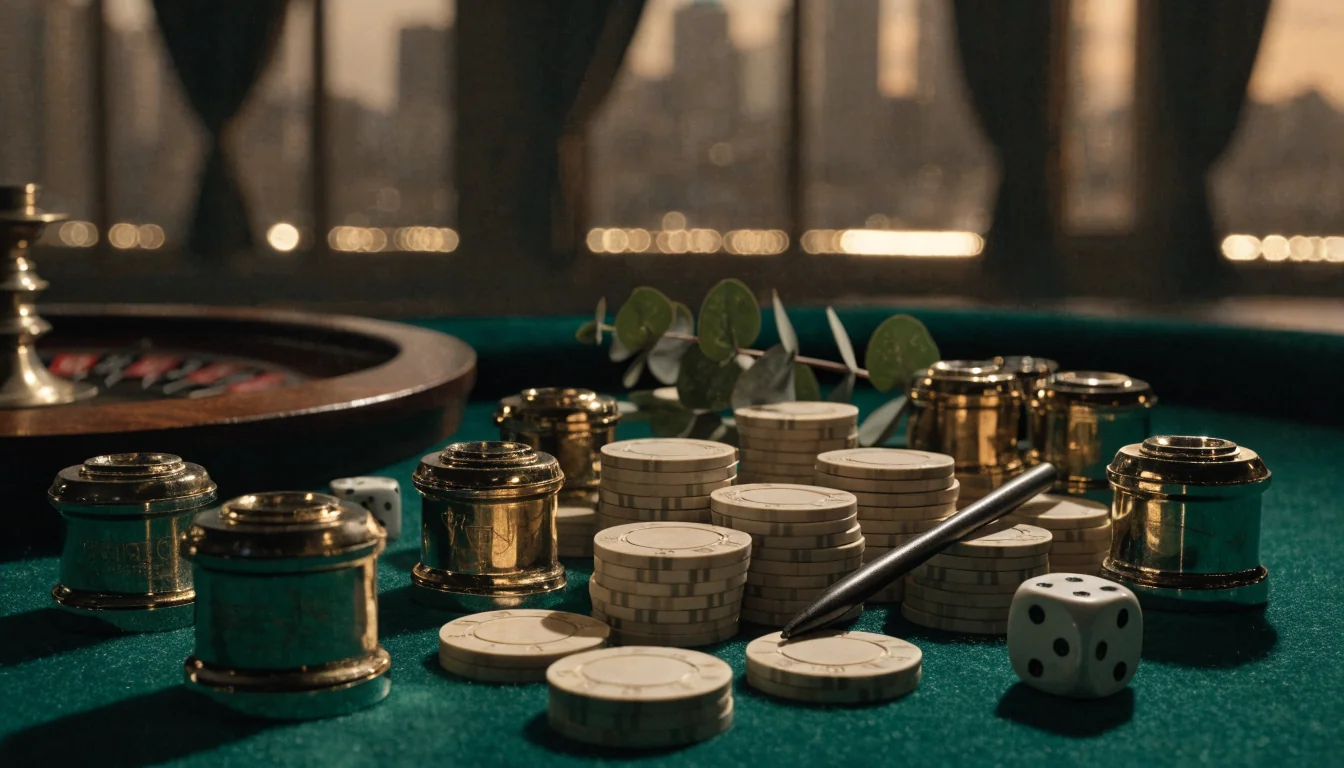
Eligibility and probability are related but not identical. A maximum bet may be a strict entry condition in one game; in another, every bet may qualify while wager size affects the chance attached to the spin. A third title may describe its rules differently. Your comparison should therefore record two separate answers: what bet, if any, is required to qualify, and whether bet size changes the jackpot chance once you qualify. If the help screen does not make both points clear, you do not have enough information to compare the games confidently.
This also prevents a common mistake when sorting a shortlist. A game that accepts any bet may suit someone who wants to keep the stake low, while a maximum-bet-only title may not. “Best” depends on the criterion: the most accessible qualification rule is not automatically the game with the largest prize, and a larger stake is not automatically better value. Put the rules side by side, then remove any title whose entry condition does not fit your limit.
Treat jackpot qualification as a condition to verify, not a tactic to exploit. Random results are not made predictable by choosing a particular bet, timing a spin or watching the pool. A larger wager cannot guarantee a win. It may change eligibility under the specific rules, but it cannot turn uncertainty into certainty.
Jackpot Qualification
- Open the paytable or help screen
- Locate the jackpot qualification clause
- Confirm if the maximum bet is required
- Note any effect of wager size on eligibility
A useful check before any session is brief: open the paytable or help screen, locate the jackpot qualification clause, confirm whether the maximum bet is required, and note any stated effect of wager size on eligibility. If the information is vague, do not fill the gap with an assumption. If you cannot afford the qualifying stake, choose a different activity rather than forcing the budget to fit the game.
The winner depends on your criterion. For low-stake access, an any-bet qualification rule is the clearer fit; for a maximum-bet title, the condition must be affordable before it is worth considering. That is a rule check, not a winning strategy.
Why a Bigger Jackpot Is Not a More Predictable One
A rising prize can make a progressive jackpot slot game look more attractive, but the size of the pool and the chance of winning are different measures. The top-tier probability is typically between one in 30 million and one in 100 million. That is well below 0.001%, so the jackpot should not be treated as income you can plan around.
A larger pool does change the potential return on an eligible bet, but only marginally. Expected return accounts for outcomes across a very large number of plays; it is not a forecast of what will happen in your session. A higher prize can lift that long-run calculation without making a win likely, predictable or due.
More value on paper.
That distinction matters when comparing games or deciding whether a headline prize is worth attention. The largest progressive slot jackpot may draw the eye, but its size alone does not tell you how likely you are to collect it. Nor does a rising figure indicate that the next spin is closer to a win. The pool can grow while the outcome of each spin remains random.

A jackpot may eventually be won; that does not make its timing readable. Past spins, quiet stretches and the displayed pool value cannot provide a dependable signal about what comes next. No betting strategy guarantees a jackpot. Treat claims that a machine is “due” or that a particular moment is especially favourable as speculation, not useful evidence.
The practical comparison is therefore not simply “Which prize is biggest?” Consider what the jackpot means for your own decision: whether the game’s published rules make you eligible, what you can afford to lose, and whether the base play is acceptable even if the top prize never arrives. A large advertised amount can dominate the presentation while leaving the uncertainty unchanged.
It also helps to separate possibility from probability. A top prize can be won, but a possible outcome is not necessarily a plausible plan for a short session. The jackpot’s expected contribution is spread across eligible play over time; your individual result may be a win, a smaller outcome or no return. A long-run average cannot promise that the return will arrive when you want it.
If you are comparing progressive jackpot slot games, use the prize as one consideration, not as a prediction tool. A higher pool can marginally improve expected return on eligible bets, but it does not erase the low top-tier odds or make the result controllable. The winner depends on what you value, and a headline amount is not a substitute for clear rules or a realistic view of risk.
Attention: The top-tier probability for a progressive jackpot is typically between one in 30 million and one in 100 million, meaning it should not be treated as predictable income.
A useful rule is simple: judge the jackpot as a possible bonus, not a future payment. When the displayed total climbs, the prize grows; no reliable countdown to a win begins.
Free Play, Real-Money Spins and Bonus Terms
Free-play progressive pokies let you explore a game without staking real money. That can show you how its screens and features work, but it is not the same as real-money play: a simulated session does not establish that a jackpot is available or that any simulated win can be withdrawn. In Australia, operators are prohibited from providing real-money online casino games, including pokies, to people physically located in the country.
Promotional free spins are different from free-play simulations. They are part of a bonus offer, and any winnings may be subject to wagering requirements before cashout is permitted. Those conditions can make withdrawing promotional free-spin winnings statistically improbable. Treat the advertised spins and the amount you can actually withdraw as separate things.
Read the requirement before claiming
A wagering requirement sets how much qualifying play must take place before bonus-related winnings can be withdrawn. It is often written as a multiple of the bonus plus deposit. Check what the multiplier applies to, which games count, and whether there are other restrictions. The headline value of a bonus is not enough to judge its cost.

A specialist review reports jackpot boosts with wagering requirements of 30x or more; that is a reported example, not a standard term for every offer. The same kind of review illustrates why the multiplier matters: a high-value bonus carrying a 50x requirement may cost more to clear than a modest bonus with a 10x requirement. A larger starting figure can look appealing while the conditions make it harder to turn into withdrawable funds. Read the actual terms before you claim.
Progressive wins may be excluded
Do not assume that jackpot winnings help satisfy a bonus requirement. Most bonus terms exclude progressive jackpot winnings from counting toward wagering requirements. If the jackpot is excluded, a large win may not reduce the qualifying play still required for other bonus funds. Check the specific wording rather than relying on the bonus summary.
Keep the categories distinct: free-play results are not real-money winnings; promotional free-spin winnings may face wagering conditions; and progressive prizes may be excluded from those conditions. If a term is unclear, do not treat the bonus as cash you can freely withdraw. The relevant comparison is not simply “more spins” against “fewer spins”, but the offer’s value against its restrictions.
For any gambling offer, read the full terms before accepting it and do not use money needed for essentials. A bonus does not improve the odds of a jackpot, and it cannot make a win predictable.
Four Ways a Progressive Jackpot Can Be Triggered
A progressive jackpot can be awarded through a symbol combination, a mystery or deterministic mechanism, a random selection, or a hyperlink feature. These labels describe how an award is triggered; they do not, by themselves, tell you whether a particular spin qualifies. Check the game’s paytable and help screens for its specific rules.
Awarded when a specific combination appears on the reels based on stated symbol rules.
Awarded when a pool passes a hidden threshold without requiring a visible winning symbol.
Uses a random number generator to select an outcome, where the chance is often proportional to the bet.
Triggered by a specific feature defined in the game’s rules.
Symbol-driven awards
A symbol-driven jackpot depends on a particular combination appearing on the reels. Its probability is the probability of landing that combination, so the trigger is visible in the game’s stated symbol rules. If you are comparing pokies, look for the exact combination and any conditions attached to it rather than assuming every jackpot uses the same symbols.
This kind of trigger is tied to the reel outcome. It is not a signal that a jackpot is “due”: previous spins do not make the required combination more likely on the next spin.
Mystery or deterministic awards
A mystery jackpot does not require a displayed winning symbol combination. It begins at a fixed value, increases with bets, and is awarded when the pool passes a hidden threshold. After the win, it resets.
Because the threshold is concealed, you cannot identify the winning moment by watching the displayed pool or timing a spin. The label “mystery” describes what you cannot see, not a pattern you can solve. Any game-specific qualification rules still need to be checked separately.

Random awards
A random trigger uses a random number generator to select a jackpot outcome. In the description of this mechanism, the chance of winning is proportional to the bet. That does not mean a larger wager guarantees a prize, or that a previous loss changes the next result. Eligibility and the way a particular game applies its rules should be confirmed in its help information.
Random selection is different from a symbol-driven trigger: the jackpot need not depend on a specific combination landing on the reels.
Hyperlink features
“Hyperlink” is another trigger category, but the label alone does not explain the precise event that awards the jackpot. The game’s rules must say what the feature does and what conditions apply. Do not infer its mechanics from the name or assume that two games using the term work alike.
Keep trigger type separate from bet qualification: one explains how an award is selected, while the other determines whether a wager can take part. Jackpot results are random; no timing method or betting strategy guarantees a win. In Australia, real-money online casino games are prohibited services when offered to people physically in the country. These distinctions are useful for understanding game rules, not for treating a jackpot as predictable.

What to Verify in Microgaming Progressive Slots
The Microgaming label identifies a software provider; it does not tell you how a particular progressive jackpot works. Treat it as a starting point for checking the game’s own information, not proof that every title uses the same pool, qualification rules or award design.
Open the game’s paytable and help screens before assessing it. Check how the jackpot is described, which bets are eligible, whether a cap is stated, and what contribution information is disclosed. These details belong to the individual game. A provider name on a page or game tile cannot substitute for them.
Also distinguish where the pool is administered from where you happen to see the game. A progressive pool may be held on the software provider’s server, rather than maintained separately by each casino offering access to the title. That arrangement does not, by itself, establish which casinos are connected to the pool or what conditions apply to a particular game. Check the game rules for those specifics.
- Check the game’s individual paytable
- Verify bet eligibility and jackpot caps
- Distinguish between provider and casino roles
- Assume all Microgaming titles share rules
- Rely on provider names as proof of pool structure
- Use game information as an invitation to play for money in Australia
For Australian readers, there is an important legal context: the Interactive Gambling Act 2001 prohibits operators from providing real-money online casino games, including pokies, to people physically in Australia. Information about a provider or game should not be read as an invitation to play for money.
A useful comparison is a short checklist: game rules, jackpot eligibility, pool details, and any stated cap. If one title explains these clearly and another does not, the clearer rules are the better basis for understanding its design—not evidence that its jackpot is easier to win. Different criteria, different choice.
Names can be familiar. Rules still matter.
Why There Is No Single Set of Progressive Slots
“Progressive jackpot” describes a prize that can grow, not one standard game format. Titles can differ in how the jackpot is attached to the underlying pokie, what rules govern it and whether the prize has a ceiling. So a catalogue of all progressive jackpot slots would group together games that may have little in common beyond a growing prize.
Some jackpots are bolt on: they are added to games that did not traditionally include a jackpot. This extra prize can operate independently of the game’s usual features. Its presence does not mean that every spin, bonus round or winning combination works the same way across different titles. Check the game’s paytable and help screens for the rules that apply to the specific pokie.
A cap can also change how a progressive pool behaves. Some operators set a maximum level; when the pool reaches it, the jackpot is awarded automatically. After a win, the pool resets to a base amount and begins building again. The cap therefore affects the prize’s path: it puts a ceiling on further growth and creates a reset point. It does not make the timing of a win predictable.

These differences matter more than the shared label. If you are comparing games, record the jackpot design, whether it is a bolt on, and whether the pool has a cap. That gives you a useful comparison without treating every progressive as the same product. There is no universal template, and a large displayed pool does not tell you what rules another title follows.
A neat category, not a uniform game.
How to Judge a Slot That Has a Progressive Jackpot
Start with the game’s published return-to-player information, or RTP. It can help you compare the stated long-run return of one game with another, but it is not a forecast for your session. An Australian Federal Court ruling in 2018 found RTP information misleading because it can be mistaken for a promise about short-term results. It describes long-run winnings; a short session can end very differently.
For a useful comparison, read the paytable and help screen alongside the RTP. Check how the jackpot is funded, whether the game has a volatility rating or a jackpot cap, and what bet qualifies for the prize. A high RTP alone does not tell you how often the jackpot can be won or how much of the return comes from the base game. The better choice depends on which published feature matters to you; there is no single figure that settles it.
Treat the top prize as exceptionally unlikely, not as income: the odds of hitting a top-tier progressive are typically below 0.001%. A larger pool does not make a win imminent. If you are reviewing payout terms, check whether a large prize could be paid in instalments or subject to a low monthly withdrawal cap.
One important Australian context: it is illegal for operators to provide real-money online casino games to people in Australia. Published game information does not change that legal position.
If you gamble in other lawful settings, set a strict weekly deposit limit and stick to it, never chase losses, and do not use rent money for jackpot play. Progressives are not a budget plan.
How do progressive jackpots differ from fixed jackpot slots?
A progressive jackpot grows as contributions from eligible wagers are added to its pool, then resets to a base amount after it is won. A fixed jackpot stays at a set value.
Do progressive slots have a lower RTP than regular slots?
They can: the base game’s house edge is slightly higher than that of a non-progressive version because part of each wager funds the jackpot. The jackpot pool can marginally increase the expected return on jackpot-eligible bets, but it does not make a win predictable.
Do I need to bet the maximum amount to win the progressive jackpot?
It depends on the game’s eligibility rules: some require a maximum bet, while others allow any bet size. Check the game’s paytable or help screen.
What is a jackpot?
A jackpot is a prize awarded when a qualifying result or trigger occurs. A progressive jackpot increases as contributions from wagers accumulate in its pool.
What taxes apply to jackpot winnings in Australia?
If you gamble recreationally in Australia, your winnings are generally not taxed. If gambling is treated as a business, the ATO may consider the profit taxable.
Published by the Wantedwin Casino team.