Best Pokies in Tasmania: Venue Checks and Availability
 Available in AU
A practical guide to checking opening status, gaming-area availability, venue features and the limits of “open now” listings in Tasmania.

Table of Contents
- Checking Whether a Pokies Venue Is Open
- What “Best” Means When Comparing Pokies
- Finding a Venue Near an Airport or CBD
- What to Check at a Tasmanian Pokies Venue
- Spirit of Tasmania Searches and Online Pokies
- Pokies Hours: What “24-Hour” Really Tells You
- Understanding Pokies in Tasmania
- Online Pokies Searches: The Australian Legal Position
- Pokies in Tasmania’s CBD: Venue Checks and Safeguards
- Cashless Pokies Searches and Payment Questions
Checking Whether a Pokies Venue Is Open
A result marked “open now” is a useful lead, not confirmation that you can enter a venue at this moment. Online listings can be out of date, and a venue’s status may change after a listing was last checked. If you are making a trip specifically to play pokies, verify directly before setting out.
Start with the venue’s own current information. Look for a notice on its official website or its own social media account that clearly relates to today’s operation. Check when the notice was posted and whether it refers to the venue itself, rather than a restaurant, bar or another part of the premises. A recent post about a special event, for instance, does not necessarily confirm that the gaming area is open.
If the information is not clear, contact the venue using a phone number published through its official channels. Ask a precise question: is the venue open to visitors now, and are the pokies available? Those are separate points. A building may be open for another service while its gaming area is unavailable, so a general answer about the venue may not settle what you need to know.
Treat “open now” as a prompt to check
A map listing or search result can help identify a possible venue, but its status label should not be the final word. It may rely on hours entered earlier, and the label might not reflect a temporary closure or a change affecting only part of the premises. A result can also refer to a similarly named place rather than the one you intend to visit.
Before relying on a listing, compare its venue name and address with the details on the venue’s own page. Then check whether the venue has published a current update. If the listing and the venue’s own information disagree, contact the venue; do not assume the more convenient answer is the accurate one.
This matters for searches about pokies being open in Tasmania, including searches for early or late availability. A broad result may describe a venue’s general schedule without establishing whether it is operating at the moment you plan to arrive. The practical check is current confirmation from the venue, not the wording of a search result.
Check the specific part of the venue
When you call, describe what you are checking: access to the premises, access to the gaming area, or availability of the pokies. Ask whether anything has changed today that affects that access. If you receive an unclear answer, ask for confirmation rather than treating “we’re open” as proof that every part of the venue is available.
A venue may have more than one public-facing service, and information about one does not automatically establish the status of another. The same caution applies to online listings that combine details for a club, hotel or other venue under one name. Confirm the part you intend to visit.
If you are relying on a message or post, make sure it is from the venue and that it applies to the date in question. An old announcement can remain visible after circumstances change. A direct call can resolve that uncertainty more quickly than trying to infer current access from a collection of listings.
Be careful with names and labels
A search result containing “Crown Tasmania” does not, by itself, establish that a named venue is in Tasmania, that it offers pokies, or that it is open. Search systems can combine words, brands and locations in ways that do not describe a real local option. Confirm the venue’s identity and address through its own information before relying on the result.
Likewise, a result that uses “open” may be referring to a business listing rather than a confirmed, live update. Look for a clear statement from the venue itself, and check that the details match the place you intend to visit. If the name or address does not line up, stop there and verify rather than travelling on the strength of a partial match.
- Compare venue names and addresses with the venue’s own page
- Check for current updates published by the venue
- Contact the venue directly if information disagrees
- Treat a search result’s “open now” label as final word
- Assume a result refers to the intended venue based on name alone
- Assume the most convenient answer is the accurate one
A short record can help if you are comparing conflicting information: note the venue name, the official contact or page you checked, and whether it confirmed access to the pokies at the time you asked. You do not need to treat every listing as a separate source of truth. The key is whether the venue itself has confirmed the specific availability you need.
For venues with more than twenty gaming machines, a report published by regionriverina.com.au describes a requirement beginning on 1 July for a dedicated responsible gambling officer to be on duty while the machines are operating. That report concerns a staffing requirement; it is not a live status feed and cannot confirm whether any particular Tasmanian venue is open now.
Use listings to find a venue, then use its own current information or direct contact to confirm access. Search labels are shortcuts. They are not a door sign.
What “Best” Means When Comparing Pokies
If you’re looking for pokies options in Tasmania in 2026, this list gives you a concise reference for the available operator details. Check the licensing and payment information that matters to you before choosing where to play.
License: Curacao Gaming Control Board OGL/2023/176/0095 (Hollycorn N.V.) LuckyVibe is listed with a Curaçao Gaming Control Board licence, OGL/2023/176/0095, held by Hollycorn N.V. You can use that licensing detail as a starting point for your own checks.
License: Curacao (operating since 2017) · Min. deposit: A$20 Uptown Pokies is described as operating since 2017, with a Curaçao licence and a minimum deposit of A$20. Those details may help you assess whether it suits your preferences.
License: Tobique Gaming Commission · Payout speed: crypto ~10-15 minutes, fiat 1-5 days · Min. deposit: A$30 SkyCrown is listed under the Tobique Gaming Commission. Its stated payout times are around 10–15 minutes for crypto and 1–5 days for fiat, and the minimum deposit is A$30.
License: Curacao, operated by Dama N.V. 7Bit Casino is listed as a Curaçao-licensed operator run by Dama N.V. You can consider those operator and licensing details when evaluating it.
License: Curacao eGaming OGL/2023/174/0082 (Dama N.V.) · Min. deposit: A$15 LevelUp Casino is listed with Curaçao eGaming licence OGL/2023/174/0082, held by Dama N.V. Its minimum deposit is A$15.
License: Curacao eGaming (Roby Games Ltd) Roby Casino is listed under Curaçao eGaming, with Roby Games Ltd as the operator. That is the available licensing information to consider.
License: Curacao eGaming (Hollycorn N.V., since 2017) · Min. deposit: A$20-30 (depends on the offer) Playfina Casino is listed as a Curaçao eGaming operator run by Hollycorn N.V. and operating since 2017; its minimum deposit is A$20–30, depending on the offer.
License: Curacao Gaming Authority (Jumpman Gaming Ltd) DragonSlots Casino is listed with a Curaçao Gaming Authority licence, and Jumpman Gaming Ltd is named as its operator. You can use those details when researching the site.
Payout speed: crypto ~90 minutes, fiat 1-5 days · Min. deposit: A$30 Kingmaker’s stated payout times are around 90 minutes for crypto and 1–5 days for fiat. The minimum deposit is A$30.
License: international iGaming licence – jurisdiction not named in the source · Payout speed: PayID 1-24 hours · Min. deposit: A$30 (PayID from A$10) House of Pokies is listed with an international iGaming licence, though the jurisdiction is not specified. Its stated PayID payout time is 1–24 hours; the minimum deposit is A$30, or A$10 for PayID.
“Best” needs a criterion. If you are comparing pokies by their potential return, the useful question is not which title has the loudest “best paying” label. It is whether you can establish the return setting that applies to the particular game at the particular casino you are considering. Without that detail, a ranking may look precise while leaving out the part that matters.
A specialist review reports that some game providers let casinos choose between different return-to-player (RTP) settings for the same pokie. As a result, a game’s return percentage may not be identical everywhere it is offered. The title alone does not tell you which setting applies. If the casino does not clearly identify the relevant RTP, you cannot reliably compare that game’s theoretical return with another offering on the basis of its name or a figure quoted elsewhere.
That is a meaningful comparison criterion, but it has a limit. RTP describes a return setting, not a promise about an individual session or spin. It cannot tell you what you will receive, or when. A higher stated percentage may be relevant when comparing disclosed settings, but it does not turn a game into a dependable way to win. The distinction matters: compare the information available, not an imagined outcome.
What past results can tell you
A past win, a run of losses or a story about a machine paying out is not evidence that the next spin is due to behave the same way. Each spin is generated through a Random Number Generator and is separate from the spins before it. A result does not carry forward as a signal that the next one will be better or worse.
This makes streak-based claims poor comparison tools. A player may remember a large payout, but that observation does not establish the game’s RTP setting or predict another result. Likewise, a machine that has not recently paid out has not thereby accumulated a debt to the next player. The sequence may feel persuasive; it is not a forecast.
Attention: A machine that has not recently paid out has not accumulated a debt to the next player, and past results cannot predict future spins.
The same reasoning applies to claims that a particular pokie is “hot,” “due” or the best payer in a venue. Those descriptions do not establish a setting or change the randomness of a spin. Treat them as claims to question, not measurements to rank by.
A practical comparison
Use criteria that can actually be checked:
- RTP information: Is a return percentage stated for the specific game and casino, rather than quoted without identifying where it applies?
- Like-for-like comparison: Are you comparing disclosed settings for the same game, or comparing figures that may refer to different versions or offers?
- Evidence quality: Is the claim about a setting clear and attributable to a source, or is it only a label such as “best paying”?
- What the figure means: Does the description make clear that RTP is not a prediction of what you will win on a particular spin?
If the setting is not disclosed, mark it as unknown rather than filling the gap with a reputation or anecdote. If two settings are disclosed, you can compare them on that stated criterion, while keeping the random nature of each spin in view. This does not identify a universally best pokie; it tells you what the available information supports.
There is also no single winner for every reader. If your criterion is a disclosed return setting, transparency about that setting matters. If the only evidence is a recent result or a promotional label, you have no sound basis for calling one game better. A tidy table can show the difference between known and unknown. It cannot make an uncertain outcome certain.
So when weighing claims about the best pokies in Tasmania, separate three things: a stated RTP setting, a claim about a past result, and a prediction about your next spin. Only the first can support a comparison of return settings, and even that is not a personal outcome forecast. The other two do not establish what a spin will return.
That is the useful distinction.
Finding a Venue Near an Airport or CBD
A location search can narrow the area you mean, but it does not establish that a pokies venue is inside an airport, close to a city centre or even in the part of Tasmania you have in mind. Treat the location as a starting point to clarify, not as a result in itself.
Pin down the place
“Near the airport” can refer to the terminal, the wider airport precinct or somewhere reachable from the airport by road. Those are different journeys. Before relying on a listing, identify the airport you mean and check the venue’s actual address against it. A map pin that appears close may be separated by roads, restricted access or other features that make the trip less direct than the map suggests.
The same applies to a CBD search. Tasmania has more than one city centre, so a result labelled as being near a CBD is useful only once you know which centre it refers to. Check the street address and the map location rather than assuming the label means a short walk from the exact place you have in mind.
“Near me” results depend on your device’s location settings; if these are inaccurate, the listing may not be nearby to you at all.
“Near me” depends on your device’s location settings and the area used to sort results. If those settings are inaccurate, a nearby listing may not be nearby to you at all. Searching for pokies in northern Tasmania has a similar limitation: a regional label covers an area, not a precise point. Narrow the location to the town or landmark you intend to visit before comparing results.
Compare distance by the journey
A map may display distance as a straight line, while your trip follows roads or pedestrian routes. For a practical comparison, use the route you would actually take and note whether the listing gives a street address you can match to the map. If a result has only a broad area label, it is not enough to judge how convenient the trip will be.
If you are travelling from an airport, check whether the route begins at the terminal or at another point within the airport area. If you are heading from a CBD landmark, use that landmark as your starting point. This makes comparisons more meaningful than relying on a general “nearby” label.
Location results can also mix different kinds of places or use broad categories. Read the listing carefully to confirm that it describes a physical venue where pokies are available, rather than an unrelated business or an online service. A map marker alone cannot settle that question.
Keep “near” specific
Set your own practical test before comparing results: walking distance, a particular starting point or a route you can take by road. Then apply the same test to each address. The better match is the one that meets your travel criterion, not necessarily the first result shown.
For searches that combine Tasmania with Victoria, check which state the result’s address is in. Similar wording can bring together places on different sides of a state boundary; the state name alone is not a substitute for confirming the location.

A useful location check is simple: confirm the place, confirm the address, then assess the route. “Nearby” is only a label until those details line up.
What to Check at a Tasmanian Pokies Venue
A venue comparison is more useful when it covers how the place handles gambling harm, not just what is on offer. Before settling on a venue, check what support is available, who is responsible for it and how staff respond when someone appears to be struggling. These are practical points you can ask about directly; a polished website is not evidence of the day-to-day practice.
Ask whether the venue has a responsible gambling officer (RGO) on duty when its gaming machines are operating, and how patrons can contact that person. A report by regionriverina.com.au describes a requirement for venues with more than 20 gaming machines to have a dedicated RGO present while machines are in use, beginning on 1 July. Because that report does not establish the rule for a Tasmanian venue, treat it as a prompt to confirm the applicable local requirement rather than assuming it applies.
It is also reasonable to ask what staff do if a patron shows signs of gambling harm. A report by regionriverina.com.au says venues will be required to record relevant events in a gambling incident register, including occasions when a patron’s behaviour suggests they may be at risk of harm or already affected by it. Ask whether the venue keeps such a register where required, what kinds of incidents are recorded and how staff can escalate a concern. The value of a register depends on whether concerns are noticed and acted on, not merely written down.
Compare safeguards, not slogans
For a simple comparison, use the same questions at each venue:
| Check | What to establish |
|---|---|
| Responsible gambling contact | Whether an RGO is available and how to speak with them |
| Staff response | What happens when a patron appears distressed or at risk |
| Incident recording | Whether relevant events are recorded where required |
| Support options | Whether staff can explain available limits or self-exclusion options |
Deposit limits, loss limits, session time limits and self-exclusion are standard responsible-gambling tools. Ask which options the venue makes available and how a patron can use them. A venue’s answer should be clear enough that you know what action to take, rather than a general assurance that it takes safety seriously.
If you are comparing what people might call the best pokies venue in Tasmania, define “best” by the evidence you can check. A venue that clearly explains its safeguards may be a better fit for someone who values accessible support; another person may weigh different features. No single label settles that choice.
Keep your questions focused on venue practices. Nearby venues, opening status and operating hours are separate checks, and a venue’s safeguards do not answer them. A short conversation with staff can reveal whether policies are explained plainly. If the answer is vague, ask who is responsible and what a patron should do when they need help. Clear process matters.

Spirit of Tasmania Searches and Online Pokies
A question about pokies on the Spirit of Tasmania is different from a question about online play. The ship’s name in a search does not establish that pokies are available aboard. Treat any claim about onboard machines as something to confirm through the ferry operator’s current official information, rather than assuming the wording of a page or post proves it.
The same caution applies to searches that combine Tasmania, a casino name and pokies. Those words do not, by themselves, confirm that a particular venue exists, is connected to the ship, or offers the service described. Separate the claims: is the information about a physical venue, a ferry trip, or an online gambling offer? Each needs different evidence. A casino-sounding label is not a licence.
When the interest is online play
Offers described as online pokies in Tasmania, including no-deposit or real-money offers, are not the same thing as pokies at a Tasmanian venue. Under the Interactive Gambling Act 2001, companies cannot legally provide real-money online pokies to people in Australia without a domestic licence. No Australian online casino licences have been issued, so there is no Australian-licensed online casino.
Legal Risk
No Australian-licensed online casinos exist; if an offshore casino refuses to pay winnings, you have no legal recourse in Australia to recover them.
An offshore site may still present itself as available to Australians. That does not make its service lawful here or give you the protections of a domestic casino licence. The legal responsibility under the Act falls on operators, not individual players, but that distinction does not remove the practical risks. If an offshore casino refuses to pay winnings, you have no legal recourse in Australia to recover them through the local system.
That is the key comparison: a physical-venue question is about whether a stated service is actually offered at that location; an online offer is also subject to Australia’s prohibition on companies providing real-money online casino games. A bonus headline cannot change that legal position. Nor does the word “Tasmania” in an offer establish that it is local, licensed or accountable in Australia.
Keep the two subjects separate before acting on any claim. For the ferry, verify onboard facilities with the operator. For an online offer, do not treat a Tasmanian reference, a familiar casino-style name or a no-deposit promotion as evidence of Australian authorisation. The wording may be persuasive. It is not proof.
Pokies Hours: What “24-Hour” Really Tells You
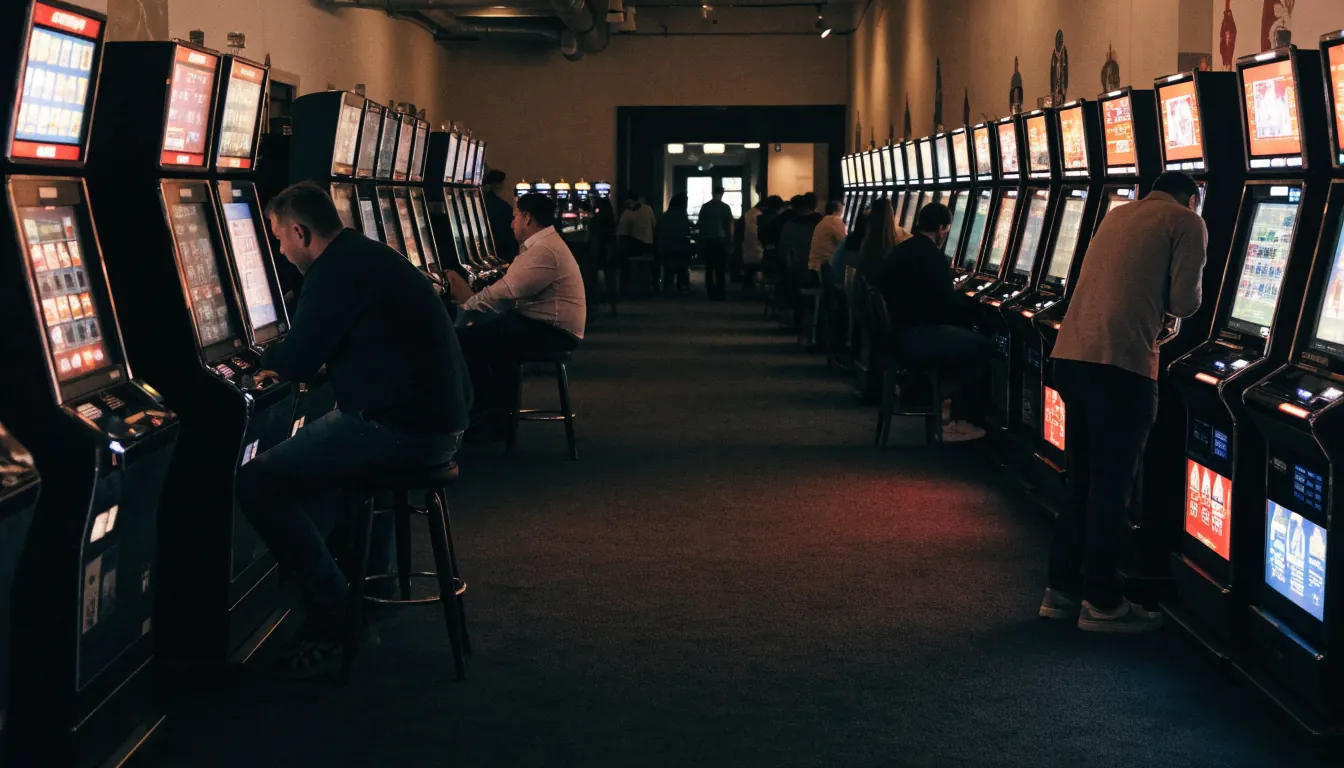
A “24-hour” label sounds definitive, but it can describe different things. It may refer to a venue’s stated trading hours, access to part of its premises, or the period when pokies are available. Those are not interchangeable. Before relying on the claim, check what the venue means by it and whether the machines operate throughout the period described.
Opening hours can also vary by day. A broad statement about round-the-clock access may not explain whether particular facilities have separate schedules, or whether operating arrangements change on public holidays. Treat a general label as a starting point, not a complete timetable. The useful detail is the venue’s own current information, with hours stated for the relevant day and the area you intend to use.
Separate venue access from machine operation
A venue may be open while pokies are not operating, or the machines may have operating conditions that differ from the venue’s general opening times. Ask specifically about machine hours rather than assuming they match the hours shown for the premises. If a timetable uses terms such as “open” without clarifying what is open, seek a more precise answer.
This distinction matters when comparing venues. A longer schedule may suit someone prioritising access at unusual times; a shorter schedule may be sufficient if the visit is planned around ordinary trading. Neither schedule says anything about the quality of the pokies or the likely result of a spin. Hours answer a practical question, not a gambling-performance one.
Read conditions attached to hours
Look for qualifications alongside any claim of continuous operation. Check whether the stated hours apply every day, whether they refer to the whole venue or a particular area, and whether machine operation is subject to separate rules. If the information is unclear, ask the venue to confirm the relevant schedule directly. A search result or directory entry may repeat a simplified description rather than spell out these distinctions.
Operating rules can also determine who must be on duty while machines are running. A report by regionriverina.com.au describes a requirement taking effect from 1 July: venues with more than 20 gaming machines would need a dedicated responsible gambling officer (RGO) present during machine operation. That is a reported requirement, not a basis for assuming that every Tasmanian venue has the same arrangement. The practical point is narrower: machine operating hours and the staffing obligations attached to them may be linked.
So, when a venue is described as open around the clock, check the scope of that claim, the days it covers and whether it applies to pokies as well as the premises. Clear hours beat a bold label.
Understanding Pokies in Tasmania
A run of wins can make a pokie feel as though it is “hot”; a stretch without a win can make the next spin seem overdue. Neither impression tells you what will happen next. Each spin is generated separately by a Random Number Generator, so the result of an earlier spin does not determine or forecast the result of the next one.
That independence is the useful starting point when you think about pokies in Tasmania. A sequence may look meaningful after it happens, but it does not create a pattern you can rely on beforehand. A win does not make another win more likely, and a loss does not make a win due. The next result remains uncertain. A streak is a description of what has already occurred, not a signal.
This also puts “best” in perspective when the question is about playing. A memorable payout, a long run of losses or someone else’s story cannot establish what your next spin will return. Past outcomes are not a guide to future ones. If you are deciding whether to play, base that decision on what you can control, such as whether you are comfortable spending the amount you set aside—not on an expectation that a particular result is about to arrive.
Searches about the largest permitted bet or cash payout raise a different issue from predicting a spin. Those terms refer to limits or rules that may affect how a machine can be played or what it can pay. They do not make the outcome predictable. Read the information displayed for the specific machine and clarify anything you do not understand before playing; a general description of Tasmanian pokies cannot establish the rules for every machine.
Likewise, a place name attached to a request for pokies does not tell you anything about how a game works. Location and game outcome are separate questions. The random nature of a spin does not change because you are in a particular town or venue.
A practical way to read claims about pokies is to separate facts about rules from claims about patterns. Rules can be checked against the information for the machine. Claims that a machine is “due”, that a previous player has warmed it up, or that a recent loss makes a win more likely are not supported by the independence of spins. Treating a past result as a forecast gives chance a story it has not earned. Dry, but useful.
Randomness of Spins
Each spin is independent, meaning past outcomes—whether wins or losses—cannot forecast the result of the next spin.
If you choose to play, decide your spending and stopping point before you begin, then avoid revising them to chase a result. No spin can promise to recover earlier losses or deliver a particular payout. The next outcome is not waiting for you to read the pattern correctly.
Online Pokies Searches: The Australian Legal Position
A search for online pokies connected with Tasmania can make a service look local without showing where its operator is based, whether it is lawful to provide games to people in Australia, or whether the service is accessible. A location phrase is not evidence of an Australian licence. There is no Australian-licensed online casino.
The key distinction is between the operator’s conduct and the player’s position. Under the Interactive Gambling Act 2001, companies cannot provide real-money online casino games to people in Australia without a domestic licence, and no such licences have been issued. The law targets operators rather than individual players. Australians can legally play on offshore sites that accept them, but that does not make it lawful for those operators to provide the service in Australia.
That distinction matters if you are trying to assess risk. A result that appears to offer online pokies to Tasmanian players is not proof that the business is authorised here. Nor does a page describing an online casino as “Australian” establish that it holds a domestic licence. The legal position is not settled by a search result’s wording.
What ACMA’s role means
The Australian Communications and Media Authority (ACMA) enforces the Interactive Gambling Act 2001. It blocks access to illegal offshore gambling sites, and internet service providers must comply with ACMA’s blocklist. So a site appearing in search results does not guarantee that you can reach it; a page may remain visible even when access to the service is blocked.
The blocklist is an enforcement measure, not a directory of approved online casinos. It does not turn an offshore operator into a lawful Australian provider, and a site’s continued appearance in results is not an endorsement. Treat visibility and legal status as separate questions.
What a search cannot establish
Phrases about the best-paying online pokies, higher stakes or services near Tasmania may describe what a page claims, not what you can verify about its legal standing. The wording alone cannot establish that a service is licensed in Australia, that it will remain accessible, or that a player has Australian legal recourse if a dispute arises.
The practical comparison, then, is not between search-result promises. It is between the legal status of the service and what the law permits an operator to provide. With no Australian-licensed online casino, an online offer should not be mistaken for a domestically regulated option. Clear distinction.
Pokies in Tasmania’s CBD: Venue Checks and Safeguards
A CBD location does not tell you how a club or other venue handles gambling harm. If you are comparing places, treat safeguards as a separate criterion from convenience: look for clear information about the support available, who you can speak to, and what happens if someone appears to be struggling.
Start with the tools you can use. Deposit limits, loss limits and session time limits are standard responsible-gambling measures, alongside self-exclusion. Before deciding whether a venue suits you, check whether it offers these options and how to set them. Ask whether a limit can be changed immediately or whether a delay applies; do not assume the process is the same at every venue. For self-exclusion, clarify how the request is made, which areas or services it covers, and what support is available while it is in effect.
Those details matter more than a broad claim that a venue takes responsible gambling seriously. A practical comparison might look like this:
| Check | What to establish |
|---|---|
| Limits | Can you set deposit, loss and session time limits? |
| Self-exclusion | How do you request it, and what does it cover? |
| Assistance | Is there a staff member you can approach for help? |
| Incident handling | How are concerns about gambling harm recorded and followed up? |
A report by regionriverina.com.au describes a requirement for venues to keep a gambling incident register, recording occurrences such as behaviour that indicates a patron may be at risk of, or affected by, gambling harm. If this is relevant to your comparison, ask the venue how staff identify a concern and what they do next. A register is a record-keeping measure; by itself, it does not explain what support a patron receives.
For a club in Tasmania’s CBD, ask specific questions rather than relying on a general statement or a sign near the machines. Can staff explain the self-exclusion process? Are limits available, and can staff show you where to find the information? What happens if a patron asks for help or staff notice a possible problem? Direct answers give you a more useful basis for comparison than an unsupported “best” label.
If gambling is causing you concern, choosing a venue with more visible safeguards is not a substitute for using them. Self-exclusion and limits are practical tools, not guarantees. Decide which protections matter to you before you go.
Cashless Pokies Searches and Payment Questions
A cashless payment label can prompt two different questions: how a payment method works, and what its presence says about the venue or service. Those are not the same test.
PayID is an alias system connected to Australia’s New Payments Platform (NPP). It lets someone direct a transfer using an email address, mobile number or Australian Business Number (ABN), rather than entering bank account details. The NPP is available through all major banks and protects transfers with end-to-end encryption.
That describes the payment network, not the recipient. If PayID appears beside a gambling payment option, it does not establish that an online casino is licensed in Australia, that a pokie is fair, or that its return settings are transparent. There is no Australian-licensed online casino; a payment method cannot supply a licence that does not exist.
For a cashless pokies venue in Tasmania, the practical question is narrower: what payment methods does that particular venue accept, and what conditions apply? A general mention of PayID does not confirm that a physical venue takes it. Check directly with the venue before relying on a payment option, and distinguish an on-site payment arrangement from a transfer to an online service.
Keep the comparison criteria separate: payment capability concerns how funds move; licensing concerns whether a service may legally be offered; fairness concerns how a game operates. PayID can answer only part of the first question. Treating it as proof of the other two would be a category error.
When a cashless option is advertised, read the payment instructions and confirm who receives the transfer. Do not infer more from the PayID name than the payment mechanism supports. A familiar bank-linked system is not a regulatory badge.
Are online pokies legal for Australian players?
Yes, Australians can legally play on offshore sites that accept them, but no Australian-licensed online casino exists. The law prohibits operators from offering real-money online pokies to Australians without a domestic licence, and players have no legal recourse in Australia if an offshore casino refuses to pay.
Are online pokies rigged?
Each spin is an independent random event determined by a Random Number Generator. However, some providers let casinos choose among different RTP settings for the same game, so its theoretical return can vary between casinos.
Can casinos change the RTP of their games?
Yes. Some game providers allow casinos to select from multiple RTP settings for the same game, so check which setting applies at the casino you are considering.
What is the legal age for online gambling in Australia?
You must be 18 or older to gamble online in Australia.
What is the best payment method for fast withdrawals in Australia?
E-wallets such as Skrill and Neteller are popular for their speed. Check the casino’s withdrawal options before depositing.
Prepared by the Wantedwin Casino editorial staff.